When to Meet in Person: US Online Dating Timing Guide 2026
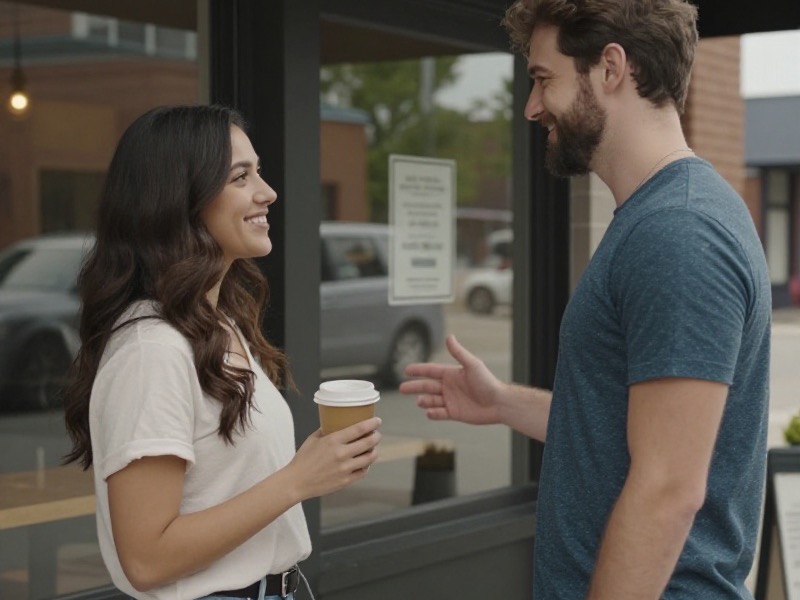
How long should you chat before meeting in person?
For most US singles, one to three weeks of steady conversation is the research-backed sweet spot between matching and meeting. Pew Research Center (2025) reports that roughly three in ten US adults have used a dating site or app, and the matches that become relationships usually move offline while interest is still fresh. Chat long enough to verify the basics, then meet while momentum is on your side.
The number that matters isn't days on a calendar, it's signal quality. A well-known Journal of Communication study (2015) on what researchers call modality switching found that online daters who met within about two to three weeks formed the most accurate impressions of each other. Wait much longer and you start dating an imagined version of the person instead of the real one.
Key takeaways
- One to three weeks of consistent chat is the sweet spot for most US matches.
- A short video call before the first date removes most big unknowns, from fake photos to flat chemistry.
- The FTC (2026) reports Americans lost more than a billion dollars to romance scams in a single recent year, so never send money to someone you haven't met.
- Meet in a busy public spot, tell a friend your plan, and control your own transport.
Why does endless texting kill momentum?
Endless texting kills momentum because anticipation has a shelf life. Statista (2026) surveys show a large share of US dating app users report fatigue with the apps, and a chat that drifts for six weeks without a plan is exactly how that fatigue starts. Excitement peaks early in a good conversation, then cools a little with every week that passes without a date.
There's a second cost: idealization. The same modality switching research (Journal of Communication, 2015) found that long online-only contact inflates expectations, so the eventual meeting has to compete with a fantasy. The fix isn't rushing. It's treating chat as a screening stage with a destination, not as the relationship itself.
Here's a simple test: if you've messaged daily for two weeks and neither of you has mentioned meeting, the conversation is drifting. Someone has to name a day. It might as well be you.
What are the signs you're both ready to meet?
You're ready when interest is clearly mutual, the person's story checks out, and curiosity outweighs nerves. Pew Research Center (2025) finds that safety and authenticity are the top concerns for US online daters, especially women, so real readiness is as much about verified comfort as it is about butterflies.
Green lights worth trusting
- Replies are consistent, not three days of silence followed by a burst of charm.
- You've had a video call and the person matches their photos and their energy in chat.
- Details stay stable. Job, neighborhood, schedule: the story doesn't shift between tellings.
- You both raise the idea of meeting. Interest in logistics is interest in you.
- Nobody is pushing. A good match suggests a time, then respects your answer.
Signs to slow down
Refusing a video call after weeks of chat, pressure to move immediately to another app, vague or shifting personal details, and any mention of money are all reasons to pause. None of these alone means you must walk away, but stacked together they outweigh good texting chemistry every time.
Why does a video call before the first date filter most problems?
A ten-minute video call screens out most of what can go wrong with an online match before you spend an evening finding out the hard way. The FBI's IC3 (2025) logged tens of thousands of romance and confidence fraud complaints in its latest report, with losses above 600 million dollars, and almost every one of those schemes depends on never showing a live face. A video call breaks that script instantly.
It also answers the question texting never can: is there actual conversational chemistry? Voice, timing, humor, the way someone reacts when you both talk at once. Five minutes on camera tells you more than five hundred messages. Treat it as a relaxed mini-date: ten minutes, decent lighting, no interview questions.
If someone always has a reason the camera can't work, week after week, take the hint. People who genuinely intend to meet you will happily wave at a phone for five minutes.
Where should you meet in a mid-size US city?
The right first-meeting venue is busy, public, easy to reach with your own transport, and easy to leave. DataReportal (2026) notes that Americans now average close to seven hours a day online, which makes the offline setting matter even more: pick a place where talking is easy and exits are easier. Here's how that plays out in five mid-size metros.
| City | Venue type that works | Why it works for a first meeting |
|---|---|---|
| Chicago | A coffee shop in a busy neighborhood like Wicker Park or Lakeview | Daytime foot traffic, easy transit access, natural one-hour format |
| Houston | A museum cafe in the Museum District | Public, well staffed, parking nearby, built-in conversation starters |
| Phoenix | An indoor cafe or food hall, especially in summer | Air conditioning, steady crowds, comfortable daylight hours |
| Columbus | A public market or coffee shop in a walkable district like the Short North | Plenty of people around, short walk back to your own car or rideshare |
| Minneapolis | A skyway-connected coffee shop downtown in winter | Busy, warm, central, and never far from other people |
Notice what's not on the list: a quiet bar at 10 p.m., a trailhead with no cell signal, or either person's home. The pattern in any city is the same. Daylight or early evening, other people within sight, full phone coverage, and a location you chose rather than one chosen for you.
What if you matched across a sprawling metro?
In spread-out cities like Houston or Phoenix, a 45-minute drive each way is a real ask for a stranger. Pick a spot near the rough midpoint, anchored to a landmark district both of you can find easily. Meeting halfway also keeps things balanced: neither person is deep in the other's territory on day one.
What does a smart first-meeting safety checklist look like?
A good checklist takes two minutes to run and covers most realistic risk. The FTC (2026) and Pew Research Center (2025) both point to the same core habits: keep the meeting public, keep your circle informed, and keep your finances completely out of it.
Before you go
- Tell a friend the who, where, and when, and agree on a check-in time afterward.
- Share live location from your phone for the duration; most rideshare apps also let you share the trip.
- Confirm the venue yourself. If your match moves the spot last minute to somewhere private, reschedule.
- Arrange your own transport both ways. No pickups on a first meeting.
While you're there
- Stay sober or close to it. Skip alcohol or cap it at one drink, and keep your drink with you.
- Keep the first meeting short. An hour is plenty; extend it next time if it went well.
- Keep addresses and finances private. No home address, workplace details, or money talk.
- Leave if your gut says leave. You owe a stranger nothing beyond basic politeness.
What should you do when the other person stalls forever?
If weeks of warm chat never convert into a plan, set a soft deadline and act on it. Statista (2026) puts the US online dating audience in the tens of millions, which means an unavailable match is occupying attention a real one could have. People who want to meet you find a way; people who don't find reasons.
Stalling usually means one of three things. The person enjoys attention without any intent to meet, they're not actually single or available, or, in the worst case, they're running a long con. The FTC (2026) notes that romance scammers commonly chat for months while dodging video calls, building trust before the first money request arrives. Endless delay plus camera excuses plus a sudden emergency is the classic sequence.
The graceful exit line is simple: "I've really enjoyed talking. I'd like to grab coffee in the next week or two, does that work for you?" A genuine match answers with a day. Anything else, including a charming non-answer, is your answer.
How does where you match change the timeline?
The platform you match on shapes how quickly and how safely chat turns into a real date. Mutual-match systems cut out cold messages, so the interest behind every conversation is already confirmed. On DateWiz, a free, moderated Telegram dating bot, a chat opens only after both people like each other, your phone number stays hidden, and messaging stays free from the first hello. That structure makes the healthy timeline easy to follow: match, chat for a week or two, hop on a quick video call right inside Telegram, then suggest a coffee in a busy spot in your city. You arrive at the first meeting already knowing the interest is mutual and the person is real, and that's most of the battle.